
The delegations from the US and Iran head to Islamabad on Friday, carrying a ceasefire that is already fraying, a Strait that is technically open and practically closed, and a negotiating agenda that would challenge even parties actually negotiating in good faith, which these groups are not. Prem Panicker continues his must read blog on the Iran War.

It remains unclear whether United States President Donald Trump or Iranian authorities will pursue the offer.

Amid rising tensions in West Asia, China is urging all parties to cease military operations, following Trump's appeal for help in securing the Strait of Hormuz.

Government officials are reportedly apprehensive that the 30,000 to 40,000 US troops currently deployed within the region could serve as the primary target of the Islamic Republic in the event of an all-out war.
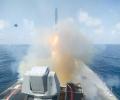
'India was not obliged to protect the Iranian ship.' 'Once the Iranian ship left Indian waters, she was on her own.' 'Guilt tripping India is wrong.'

White House Press Secretary Karoline Leavitt on Tuesday said that the United States has not ruled out the option of sending troops on the ground in Iran and that military operations in the Persian Gulf nation would end once the objectives of Operation Epic Fury are achieved.

The big question is whether Trump is any longer in command of the situation. For all practical purposes, the war seems set to cascade as the US is preparing for a potential ground operation in Iran and threatens to destroy 'bridges next, then electric power plants', points out Ambassador M K Bhadrakumar.

Egypt, Pakistan, Saudi Arabia and Turkey met in Islamabad in what analysts say is the formal opening of a new diplomatic formation that could reshape the post-war regional order. Their immediate goal is a ceasefire; their larger ambition is to ensure that neither Iran nor Israel emerges from this war in a dominant position. Pakistan's foreign minister then flew directly to Beijing and mooted a Chinese role as guarantor of any eventual agreement. Prem Panicker continues his must read daily blog on the Gulf War.

The purge in Washington does not pause the war. Strikes continue, Hormuz remains closed, and Brent crude is still dancing around $109 a barrel. For India, the command chaos in the Pentagon is another layer of uncertainty piled on five weeks of conflict that was already straining every buffer Delhi has.

Fight on toward goals that keep receding, or exit with most objectives unmet. Trump is agitated, his poll numbers falling below the Plimsoll line, his base fractured between those who back the war and those who remember that he campaigned on ending them.

Israeli Prime Minister Benjamin Netanyahu has threatened to continue targeting Iranian leaders, claiming recent successes in eliminating key figures. He asserted that Israel, with US support, aims to undermine the Iranian regime and empower the Iranian people.

What we are watching is something different: A fog manufactured and maintained by the people who started the war, so that the question of why it was started never has to be answered, observes Prem Panicker in his must read blog on the war in the Middle East.

Iran is fighting a different war: Older, slower, and in some ways more dangerous. Iran doesn't need to shoot down an F/A-18. It only needs to make the Strait of Hormuz feel dangerous long enough for insurance markets, shipping companies, and oil futures traders to do the rest. Prem Panicker continues his must-read daily blog on the war in the Middle East.

Amid escalating tensions, Iranian Deputy Foreign Minister Saeed Khatibzadeh declares Iran's unwavering commitment to a 'heroic nationalist defence' against perceived American and Israeli aggression, vowing to resist what he calls an 'invasion' to the very end.

Israel wishes to continue its bombing campaign until Iran's military and industrial infrastructure are degraded to a point where it ceases to pose a threat to Israel. Iran, for its part, has learnt from its experience in the 12-day war of last June. Any ceasefire, it believes, will only be a prelude to another attack on itself. It is determined to convey that any attack on Iran will impose heavy costs on Israel, the US, America's allies in the Gulf -- and on the world at large, points out T T Ram Mohan.

Dozens of Indian-flagged ships and over a thousand seafarers are stranded in the Persian Gulf, Gulf of Oman, and surrounding areas due to the closure of the Strait of Hormuz amidst ongoing military actions involving the US, Israel, and Iran.

This weekend, Donald Trump has begun to say the quiet part out loud -- that he wants to take control of Iran's oil, a formulation more in line with his robber-baron style of international relations.

AICC President Mallikarjun Kharge criticised Prime Minister Narendra Modi's relationship with US President Donald Trump, alleging that Modi is acting as Trump's 'slave' and jeopardising India's interests on trade, oil and foreign policy.

The question is no longer whether the war will expand. It has. The next few days will tell us whether the war stabilises around Hormuz or whether the Strait itself becomes the trigger for a far larger rupture. What to watch for over the next 48 hours is simple: Any move by the US toward direct naval control of the Strait; any credible Iranian attempt to disrupt or mine shipping lanes and, critically, whether energy infrastructure in the Gulf continues to be targeted.If those lines are crossed in tandem, the war will no longer be containable within the region.

Families in Uttar Pradesh express anxiety over the safety of their relatives in the Middle East following a joint US-Israel military strike on Iran, which has triggered retaliatory actions and heightened regional tensions.

'We need to give Pakistan something serious to think about on its eastern front -- that is the only way to actually help Afghanistan right now.'

When missiles fly in this region, they are never just aimed at military targets.

When everyone has footage and no one can verify it, the loudest voice wins, notes Prem Panicker who begins a daily blog on the War in the Middle East.
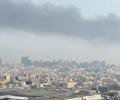
Following a joint attack by the US and Israel on Iran, India is calling for restraint and de-escalation to avoid further military confrontation in the Middle East.

NASA astronaut Sunita Williams retires after 27 years, completing three missions aboard the International Space Station and setting numerous spaceflight records. She is currently visiting India.

'The culture of mankind has been spread by the travel gene which pushes one in five people to have the curiosity to move to unknown destinations.'

Astronaut Sunita Williams discusses how space travel changed her perspective on life, emphasizing the unity of Earth and the silliness of human conflicts when viewed from space.

Will rising tensions between US-Israel and Iran threaten crude oil supply through the Strait of Hormuz, putting India's fuel prices, imports, and economic stability at risk?

Following the seizure, Moscow issued a strong condemnation asserting that no country has the right to use force against vessels lawfully registered under another state's jurisdiction, particularly on the high seas.

Where are the most oil reserves in the world? Who owns them? Find out!

China has commissioned its third aircraft carrier, the Fujian, featuring advanced electromagnetic catapults, amidst rising tensions and military modernization efforts.

The stock of automotive (auto) components major Bharat Forge has risen 14.6 per cent over the past month. Despite ongoing demand challenges, strong operating performance in the July-September quarter (Q3) of 2025-26 (FY26), a diversified revenue base, and expectations of a gradual recovery have lifted sentiment.
'If the Trump administration could gain access to the nuclear weapons, they would be satisfied -- at least they could control them.'

The Department of War was originally established by President George Washington when he created the Army. The name was later changed in 1949 during President Harry Truman's broader reorganisation of the military.

Can Imperial Japan be forgiven for what it did to Indian soldiers it was supposed to protect as PoWs?

A Russian Parliament member claims Russia has enough nuclear submarines to counter US deployments, following statements by Donald Trump and Dmitry Medvedev.

'The background for the Saudi-Pakistan agreement is the fact that the regional security order has collapsed due to the Israeli attack on Doha.' 'The Americans have largely abandoned their security guarantee for West Asia and the region has no choice but to look at alternatives.'

China calls the shoal Huangyan Dao. China has already deployed some of its biggest CCG vessels in the area to assert its claims.

Military ties between Indian and American defence forces are growing further in the middle of a conflict with China, as the US Navy has agreed to provide three 127mm medium calibre guns from its own inventory to urgently equip warships of the Indian Navy as part of a Rs 3,800 crore deal.
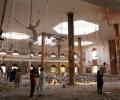
'But that was not our aim. Our objective was already achieved.'
